
The Canadian Army has reorganized around four primary formations with distinct missions, the Department of National Defence (DND) announced on 5 October. They are 1st Canadian Division in Edmonton, 2nd Canadian Division in Montréal, and two Kingston formations: the Canadian Army Support Division and the Canadian Army Doctrine and Training Centre.
A 2 October backgrounder sets out each formation’s assigned units as of 10 September, the date the Army shifted away from its largely regional divisional structure. The 5th Canadian Division, which was based in Halifax, had already closed on 27 June.
Anvil North covered 1st Canadian Division in September. The Edmonton formation now commands the three Regular Force mechanized brigade groups. The headquarters that formerly held the name within Canadian Joint Operations Command is now designated the Canadian Joint Response Force Headquarters.
According to DND, 2nd Canadian Division forms the foundation for the defence of Canada by bringing together Army Reserve and Regular Force capabilities for domestic land operations, territorial defence, emergency response and sovereignty tasks. It also directs Reserve force generation and mobilization, and commands forces responding in Arctic, northern and remote regions.
The Army Reserve’s ten brigade-level formations, known as Canadian Brigade Groups, all now fall under 2nd Canadian Division. Eight have transferred to the division alongside the 34th and 35th, which it already commanded. Reserve units are established in more than 100 communities across the country.
New Territorial Battle Groups are intended to offer scalable Reserve combat capability for domestic operations and mobilization. Meanwhile, Arctic Response Company Groups are expected to achieve initial operating capability in December 2026, providing regionally based forces for northern operations.
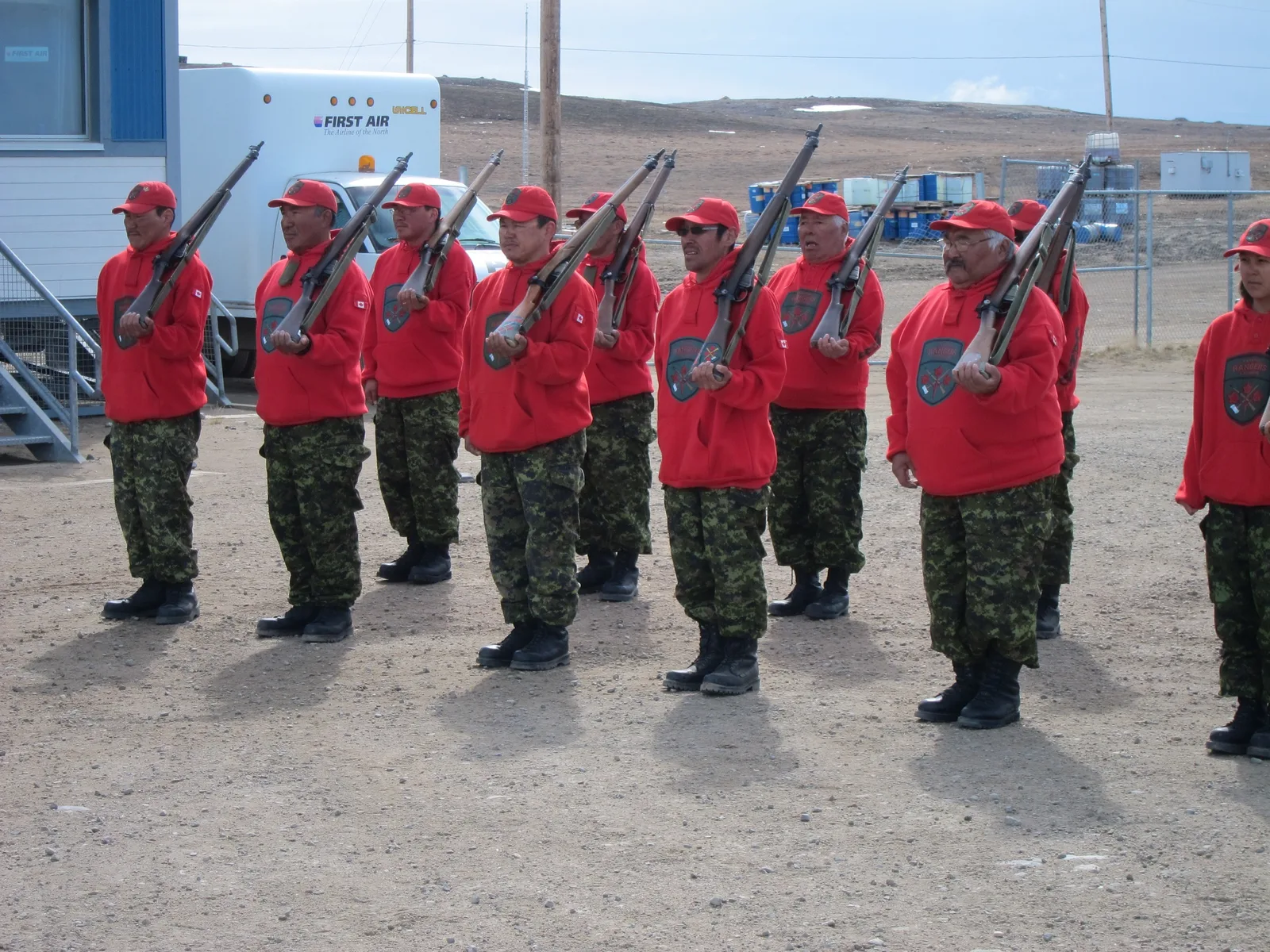
The 1st through 5th Canadian Ranger Patrol Groups are commanded by a Canadian Rangers Group headquarters. A new 2nd Military Intelligence Battalion also consolidates four intelligence companies under one headquarters.
In 1st Canadian Division, the three mechanized brigade groups’ combined headquarters and signal squadrons have been split into separate brigade headquarters and 1, 2 and 5 Signal Regiments. A new 10 Signal Regiment supplies communications and information systems support at divisional level.
The division’s 6 Canadian Combat Support Brigade brings together the new 8th Air Defence Regiment and new 1st Chemical, Biological, Radiological and Nuclear Battalion with the redesignated 4th Air Defence Regiment.
Plans also call for an Intelligence, Surveillance, Target Acquisition and Reconnaissance Battalion within that brigade. A second planned unit, 9th Rocket Regiment, Royal Canadian Artillery, would introduce a long-range fires capability to 1st Canadian Artillery Brigade.
The new 1st Canadian Sustainment Brigade delivers operational sustainment through the newly created 1st Battalion, Royal Canadian Logistic Service. DND separates this field role from the Canadian Army Support Division’s responsibility for base and garrison support.
The Support Division manages four regional support groups: West, Central, East and Atlantic. It links Army formations with national supply chains and helps develop the infrastructure needed for Army growth.
The Doctrine and Training Centre assumed command of the four Army Training Centres in spring 2026 and established nine battle schools affiliated with the brigade groups, bringing individual and collective training into a single system.
Lieutenant-General Michael Wright, Commander Canadian Army, said the structure is meant to turn investment into operational readiness and reflects the Army’s role as “an action arm of Canada’s Defence Investment Strategy”.
Under the revised command structure, formation commanders gain greater authority over their core responsibilities. Canadian Army Headquarters focuses on strategic oversight, force development, sovereignty and territorial defence.
DND says some units will be established and new capabilities integrated progressively over the months and years ahead. For many modernization initiatives, reaching initial and full operating capability depends on the availability of personnel, equipment, infrastructure and training capacity.
Related coverage: The rocket artillery purchase behind the planned 9th Rocket Regiment is covered in the long-range precision strike program guide. The Army’s cold-weather drone requirement is set out in the MINERVA challenge report.