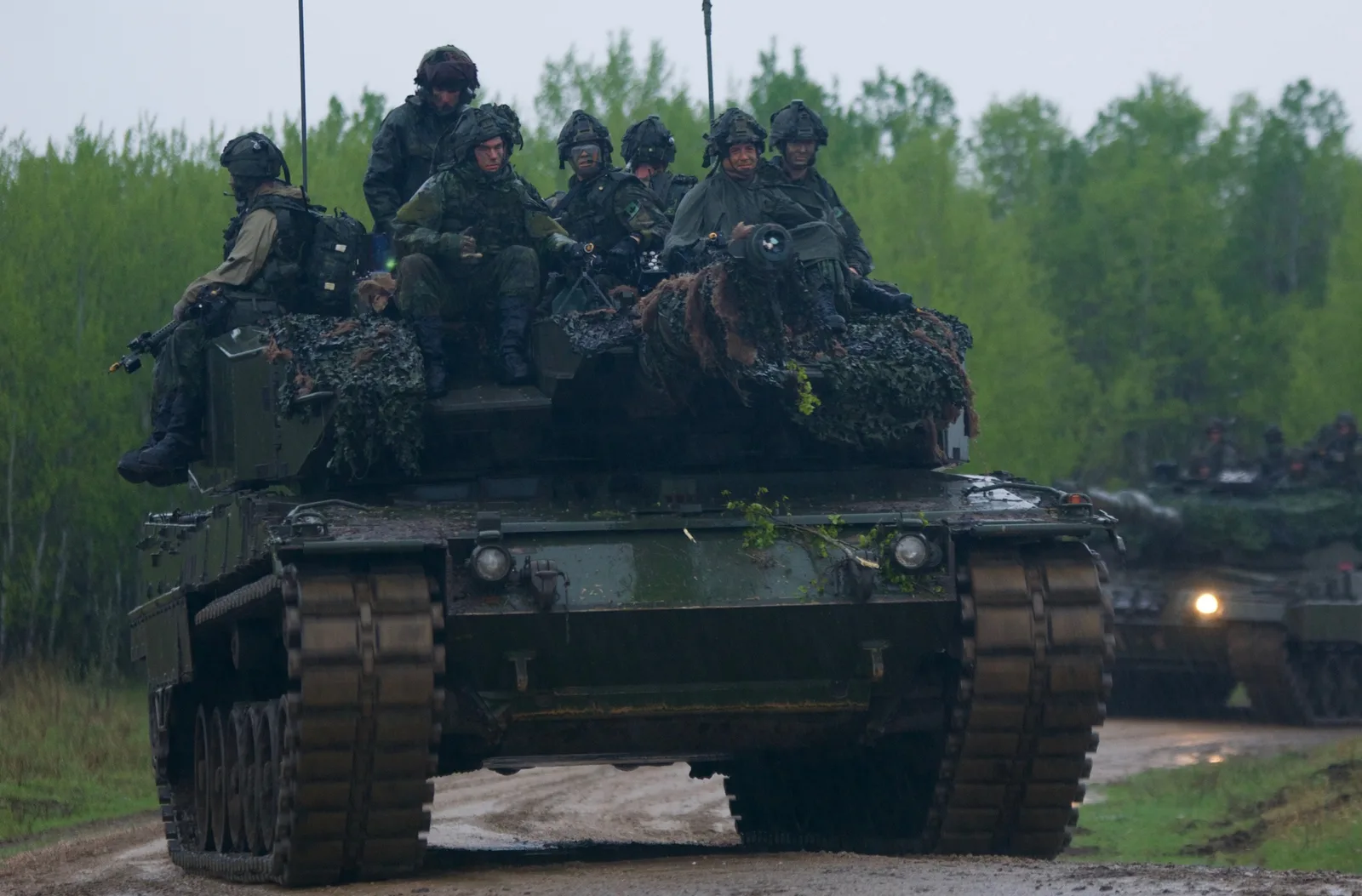
On 10 September, the Canadian Army brought its three Regular Force mechanized brigade groups under 1st Canadian Division, establishing an Edmonton-based command to prepare forces for major combat operations. The brigades will retain their existing locations.
The change gives the Army a common command around which to organize its combat formations and supporting capabilities. The underlying requirement was set out in its Inflection Point 2025 strategy: Canada lacked sufficient enabling capabilities and sustainment to deploy and maintain a fully capable independent brigade for an extended period.
In effect, the Army is trying to address the support needed to keep a larger force operating. Its strategy calls for stronger air defence, long-range sensors, precision fires and logistics at division level.
Organizing the Manoeuvre Division
The Manoeuvre Division commands 1 Canadian Mechanized Brigade Group (1 CMBG), 2 CMBG, 5 Groupe-brigade mécanisé du Canada (5 GBMC), and 6th Canadian Combat Support Brigade.
The announced formation structure also provides for 1st Canadian Artillery Brigade, 1st Canadian Sustainment Brigade and 3rd Canadian Light Infantry Regiment. The artillery and sustainment headquarters will be at Canadian Forces Base (CFB) Edmonton, while the light infantry regimental headquarters will be at CFB Petawawa.
Sustainment covers transportation, maintenance and supply. These functions are central to the Army’s stated problem: deploying combat units also requires the means to support them over an extended period.
The division’s name has a separate headquarters history. Effective 10 August, the previous 1st Canadian Division Headquarters in Kingston became the Canadian Joint Response Force Headquarters. It remains in Kingston under Canadian Joint Operations Command, with responsibilities including disaster response, evacuations and establishing command arrangements for deployed operations.
The division’s title and identifiers transferred to the Army in September.
Bringing light infantry and long-range fires together
The light infantry plan shows how the Army intends to regroup some of its existing capability. It will bring the third battalions of The Royal Canadian Regiment, Princess Patricia’s Canadian Light Infantry and Royal 22e Régiment into one regiment.
In its 14 September explanation, the Army described a rapidly deployable force suited to restrictive terrain and Arctic conditions, able to reinforce other formations or secure important locations. These are existing battalions being reassigned; the plan does not add three new battalions.
The artillery component also has an equipment program behind it. In August, the Army reported a finalized C$2.6 billion agreement through the US Foreign Military Sales program for 26 M142 High Mobility Artillery Rocket System (HIMARS) launchers and associated support. This Long Range Precision Strike (Land) capability will sit under 1st Canadian Artillery Brigade.
However, deliveries are expected to begin by 2029, with initial operational capability in 2030 and full capability in 2034. The command changes therefore begin a process whose equipment milestones extend well into the next decade.
For Canadian industry, that process could generate work in integration, training, maintenance and replenishment as requirements become funded projects or solicitations. The reorganization itself does not establish those individual opportunities.
Ultimately, the Army’s own diagnosis sets the measure of success: whether Canada can deploy a capable formation and sustain it. The new structure provides an organizational basis for that effort; its practical effect will depend on the equipment, personnel and support available to the force.