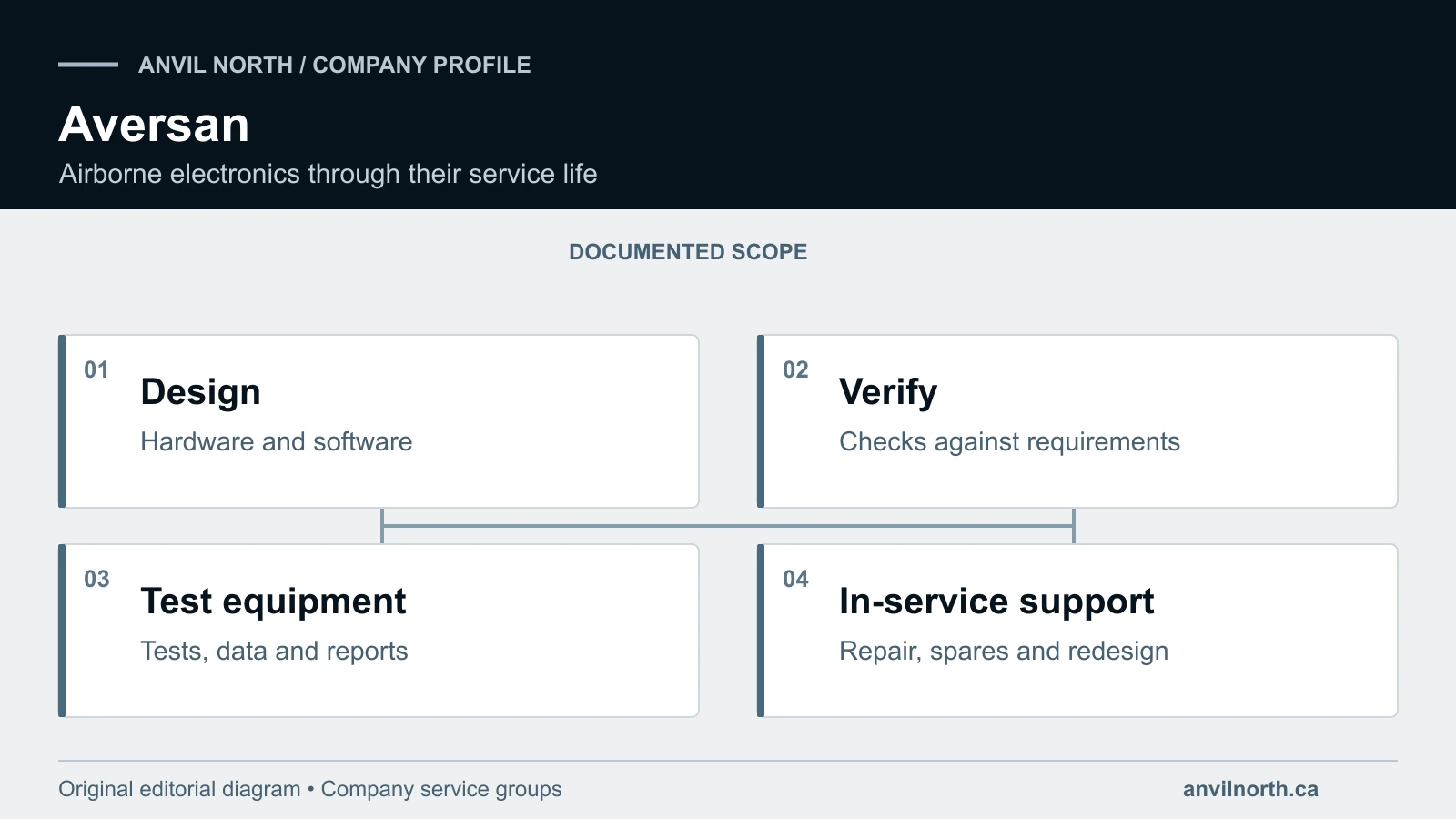
Aversan designs aerospace electronics and provides engineering, testing and support for existing systems. The Mississauga firm works on airborne hardware and software with defined safety needs. It also builds test equipment and helps customers support ageing electronics. Those services cover both new designs and systems already in use on aircraft.
What does Aversan do?
Aversan’s service range covers engineering and product design for aerospace and other industries. Its airborne electronics work includes new designs and the use of existing units. It also offers tests, checks against design needs and support for production.
Define the task the engineering team must take on first. Designing a unit, checking its design and building tools to test it are separate jobs. Each job needs its own scope and a clear set of deliverables.
Aversan’s engineering role differs from selling a single RF part. Nanowave’s amplifiers and other RF products show that more focused supply role. The two ranges help explain different needs without implying a supplier link between the firms.
How does Aversan support airborne electronics?
Aversan develops hardware and software for units with defined safety needs. It cites DO-178C, DO-254 and DO-160 in its airborne electronics service description. Those references describe the work’s context; they do not approve every product the firm develops.
Aversan offers custom designs and work using commercial off-the-shelf equipment. A new design starts with the function the customer wants it to perform. Using existing units still needs checks on how they fit within the whole system.
| Service area | Documented activity | Principal deliverable question |
|---|---|---|
| Airborne electronics | Hardware and software development | What product and interfaces must the design address? |
| Verification and validation | Checking behaviour against defined requirements | What evidence must demonstrate compliance? |
| Equipment integration | Combining existing components within a system | Who owns the complete configuration? |
| Automated testing | Test execution, data collection and reporting | What must the test system measure? |
| Lifecycle support | Repair, redesign and obsolescence management | What must remain supportable? |
The way a unit fits in the aircraft creates further design needs. Comtek’s avionics racks provide the structure that supports installed electronics and their connections. Cables and harnesses form other links that the system design must address.
What do automated testing and obsolescence support involve?
Aversan’s landing-gear test case study describes work for Safran Messier-Bugatti-Dowty on production testing. It says the system runs tests, gathers data and produces reports. The case shows one type of project, without promising the same outcome for other jobs.
A test system measures whether a product meets its acceptance limits. It serves a different purpose from the aircraft unit it tests. Define the measurements, connections and checks needed to show that the test system works.
Aversan’s obsolescence work addresses ageing electronics, missing records and parts no longer available. The firm offers reverse engineering, redesign and work to find replacements. A planned change needs review for its effects on the existing design and approval basis.
Its in-service support includes repair, spares and engineering help for airborne electronics. These services address units after the first design and production stages. They help customers assess how to keep a system working through its service life.
What should an electronics-development enquiry include?
State the system’s task and the current stage of the project. Include drawings, connection data and the evidence needed to support approval. For existing units, describe the exact version and the fault or supply problem.
| Project type | Information to provide | Responsibility to establish |
|---|---|---|
| New electronics | Requirements, interfaces and operating environment | Design and verification ownership |
| Existing-equipment integration | Component data and system architecture | Configuration and interface control |
| Automated test equipment | Test cases, measurements and acceptance limits | Test-system validation |
| Obsolescence redesign | Existing records and unavailable components | Change assessment and qualification |
| Repair and sustainment | Equipment identity and failure history | Support scope and release evidence |
The table provides a starting point for defining an engineering job. The customer’s design needs and approval duties still set the agreed scope. Canada’s supplier directory covers firms with related services and different areas of work.
Aversan: common questions
What kind of company is Aversan?
Aversan is an engineering firm with a Canadian operation in Mississauga, Ontario. It designs airborne electronics, builds test equipment and supports systems already in use. Those tasks can cover new hardware, software or changes to an existing unit. Define the engineering job before comparing Aversan with firms that make parts or maintain whole aircraft.
Does Aversan develop both hardware and software?
Aversan offers both hardware and software design for airborne electronics with safety requirements. It also checks designs and helps bring existing units into a larger system. These tasks may form separate work packages within the same project. The customer should state each task, its connections and the evidence needed before the team agrees on a scope.
What is Aversan’s automated test equipment work?
Aversan’s automated test equipment runs checks, collects data and reports the results. Its landing-gear case study describes that work for a named aircraft industry customer. The test system has its own design needs, apart from the product under test. A buyer should define the measurements, connections and pass limits that the new test equipment must support.
Does mentioning DO-178C or DO-254 prove product approval?
Aversan cites DO-178C and DO-254 in its descriptions of airborne electronics work. These standards relate to how teams develop and assess software or hardware. Mentioning them on a service page does not approve a given product or installation. Buyers need the records and approval scope for the exact unit they plan to use on the aircraft.
Can Aversan support electronics after initial development?
Aversan offers repair, spares support and help with parts that become hard to source. It also redesigns units or reconstructs technical details when original records are missing. This work supports systems after the first design and production stages. The planned route depends on the unit, available records and the effects of changing any part of its design.
How does Aversan differ from a cable manufacturer?
Aversan designs electronics and software, develops tests and supports systems during service. A cable and harness maker supplies the physical links between different units in a system. Both roles can matter in one project, though they produce different items and records. Define who owns the design, builds the parts and checks the whole system before dividing the work.
Follow Anvil North Weekly for news on Canadian defence electronics and suppliers. The newsletter connects company developments to sourced coverage of programs and purchases.
Sources
- Aversan company portfolio
- Safety-critical airborne electronics
- Landing-gear production test-equipment case study
- Reverse engineering and obsolescence services
- Maintenance and lifecycle services
Earlier identity and portfolio references retained from the 13 September profile review: