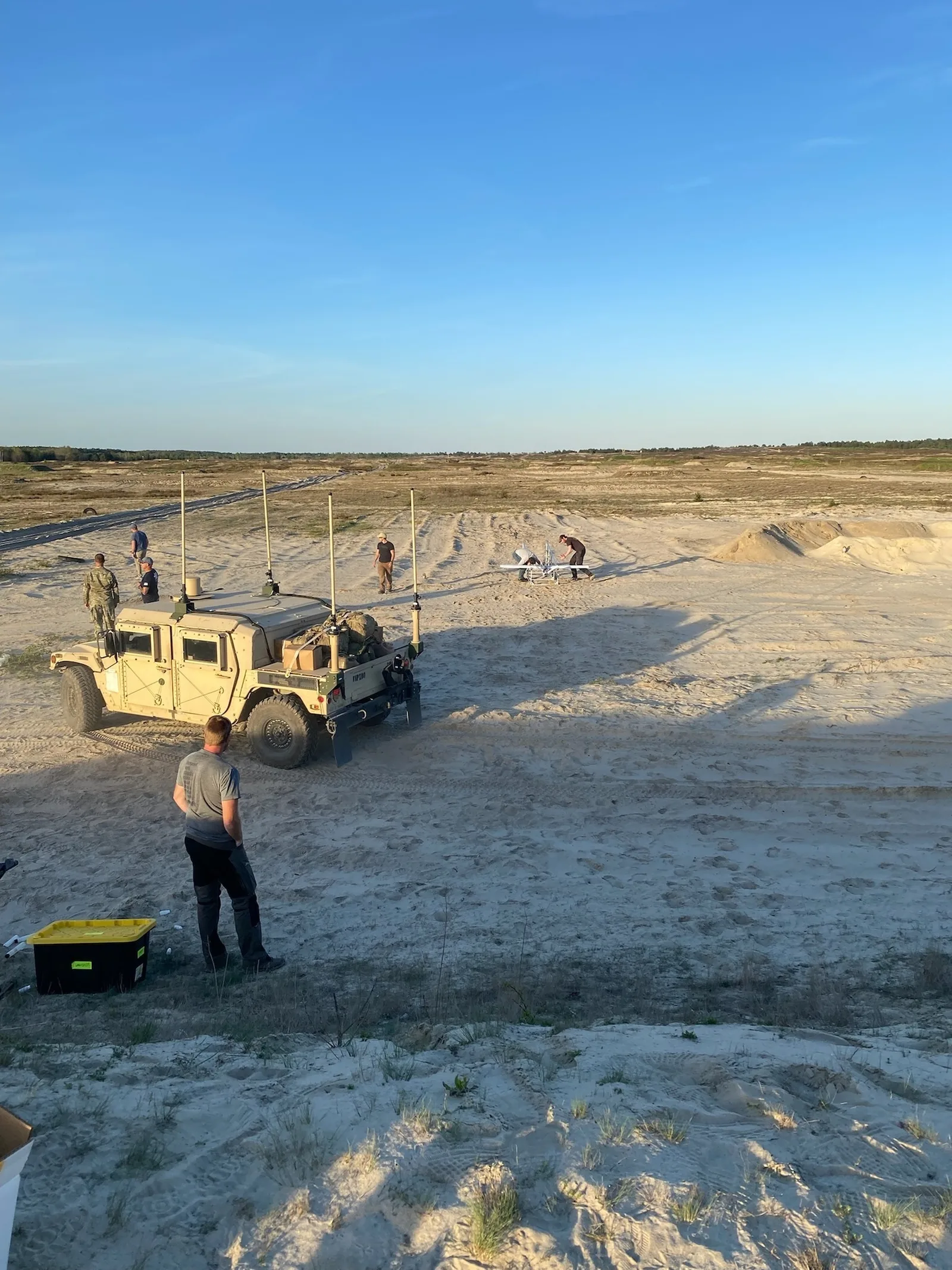
Canada and Ukraine’s new partnership framework is developing a training component alongside its drone-production agenda. On 16 September, Calian and Ukrainian drone company SkyFall announced an agreement to develop unmanned-systems training for Canada, the United Kingdom, NATO members and allied forces.
The agreement follows the declaration for a One Hundred Year Partnership signed by Prime Minister Mark Carney and President Volodymyr Zelenskyy in Calgary on 10 September. That declaration sets a wider direction for defence cooperation, economic reconstruction and ties between the two countries. The final partnership agreement is targeted for December 2026.
Together, the developments point to a broader industrial objective: connecting Ukrainian technology and operational experience with Canadian production and training capacity. Turning that objective into sustained capability will require individual programs, customers and delivery commitments.
Calian and SkyFall connect drone experience with allied training
The companies plan to combine SkyFall Academy’s unmanned-systems expertise with Calian’s military education, simulation and readiness services. Their announcement describes programs for military personnel, instructors and technical specialists, rather than only drone operators.
Calian says SkyFall Academy is certified by Ukraine’s Ministry of Defence. SkyFall’s product portfolio includes the Vampire heavy bomber drone, Shrike first-person-view drones and P1-SUN interceptor. These identify the company’s background; the release does not announce Canadian purchases of those platforms.
The training proposition addresses a practical problem for armed forces adopting uncrewed systems. Buying airframes creates only part of the capability. Units also need instructors, technical support and exercises that integrate the equipment into their wider operations.
For this partnership, the next measure of progress will be named training programs and their delivery. The announcement does not disclose a government contract value, course schedule or committed student numbers.
What the 100-year Canada–Ukraine declaration provides
The September declaration takes effect on signature, while setting the December target for the final agreement. Its defence provisions include a foreign- and defence-minister format and an industrial mechanism to address regulatory and procurement barriers.
The partnership agenda spans joint research, testing, technology transfer, licensing and intellectual-property protection. It also envisages exploring predictable demand through longer-term purchasing arrangements. These are areas for cooperation, rather than a published schedule of production orders.
For manufacturers, that last element is particularly relevant. A company can establish a partnership before it has enough committed demand to justify a production line. Longer-term purchasing commitments could make investment easier to support, provided that customers, quantities and funding are eventually specified.
Airlogix and GDMS-Canada illustrate different production routes
The industrial work also predates the September declaration. In May, Canada’s Department of National Defence announced an arrangement with Ukraine to establish Airlogix–Sentinel drone production in Canada for Ukraine. The announcement provided a government-to-government foundation for the project, without publishing a delivery quantity or schedule.
In September, General Dynamics Mission Systems–Canada and Green Tech Harvest announced a memorandum of understanding to explore cooperation, including the production of Ukrainian technologies in Canada. That represents another industrial pathway, with the companies examining how Ukrainian designs and experience could connect with Canadian manufacturing.
These initiatives occupy different stages. A government arrangement can establish a framework, while a company memorandum can begin the work of defining a commercial project. Neither, by itself, demonstrates that a particular production quantity has been delivered.
What Ukraine’s 30% drone statement covers
Ukraine’s presidency said 30% of drones produced under the Ukrainian–Canadian program would go to Ukraine’s Defence Forces. Its account of the Calgary presentation also identified systems including Vampire, P1-SUN, Shrike and GOR drones. Displaying those systems establishes what was presented, rather than what Canada ordered.
The stated share applies to that bilateral program. It should not be extended to all Canadian drone production or to every supplier receiving a domestic defence contract. The reviewed Canadian announcements do not define a production denominator or delivery schedule for the 30% statement.
How the partnerships relate to Canada’s drone contracts
Canada separately announced up to C$50 million in initial Defence Drone Innovation Marketplace contracts. Those procurement awards have their own scope and should be tracked separately from the bilateral declaration and corporate partnerships.
The September framework brings several activities into the same policy agenda: production, technology cooperation, training and potential longer-term demand. Their execution will still depend on individual agreements.
For Canada, the opportunity is to build capabilities that extend beyond assembling a drone. Manufacturing, instruction, maintenance and adaptation could develop together. The evidence to watch is correspondingly concrete: funded programs, production facilities, delivered systems and personnel completing training.