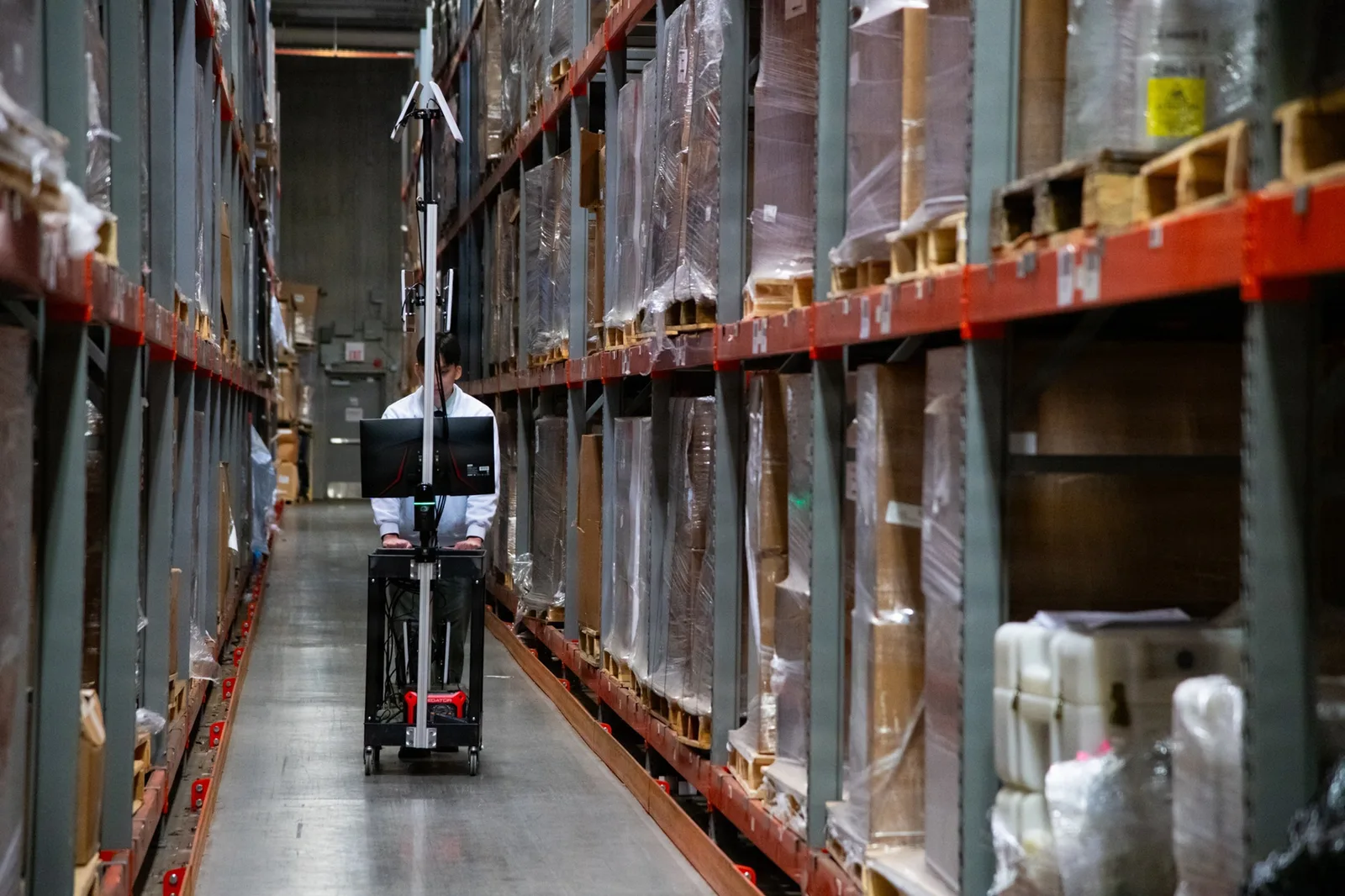
TL;DR
-
No blanket certification: ITAR facility requirements depend on the activities being performed.
-
Control access: ITAR-compliant warehouses must protect both the goods and the technical data, including files stored within a warehouse’s software suite.
-
Retain records: Registrants must generally retain records for five years. Goods earmarked for export must carry licences or valid exemptions.
-
Canada differs: In Canada, storing controlled goods generally requires registration in the Controlled Goods Program (CGP), unless explicitly exempt.
The International Traffic in Arms Regulations (ITAR) govern defence articles, defence services, and technical data, but they don’t outline or specify exactly what a warehouse or third-party logistics provider (3PL) needs to do when holding ITAR-controlled items.
While some buyers might ask for an “ITAR facility” or “ITAR-compliant” warehouse, no agencies in the United States issue that certification or anything similar to it. Rather, warehouses and logistics providers are expected to carry out the following three activities when holding ITAR-bound goods:
-
Registration: Required for manufacturing, exporting, temporarily importing or brokering defence articles, or furnishing defence services. Though storage is not explicitly included in this list, warehouses and 3PLs must ensure the registration details are complete and correct.
-
Access: Technical data cannot be released to a foreign person under the ITAR without an applicable authorization or exemption.
-
Recordkeeping: Any person required to register must keep records for at least five years.
It should be noted that in Canada, there is a registration requirement for those holding controlled goods (which can overlap with ITAR, but can also include other items as defined by Canadian regulations).
Anyone who examines, possesses, or transfers controlled goods must register with the Controlled Goods Program (CGP), unless an applicable exemption or exclusion applies.
Is there an ITAR certification for warehouses and 3PLs?
There is no US government-issued ITAR certification for a warehouse, a 3PL, or another business.
Currently, the Directorate of Defense Trade Controls (DDTC), a State Department office responsible for ITAR, registers companies engaged in specific activities, but it does not certify whether those companies’ facilities are compliant.
“ITAR-registered” basically means that the business or entity has filed a registration statement with the DDTC and maintains that registration through an annual renewal process. The specific filing is the DS-2032, which gets submitted via the Defense Export Control and Compliance System (DECCS).
“ITAR-compliant” describes how that business or entity carries out its work, including the controls it follows when registration is not needed.
DDTC registration gives the US government information about the businesses involved in controlled activities. As 22 CFR 122.1 makes clear, the DDTC does not confer any export rights or privileges.
So, businesses applying for export licences also need the appropriate empowered official, who has the authority to sign applications on the applicant’s behalf.
Therefore, for a prospective client, the more useful evidence is the company’s registration status with the DDTC, or a documented basis as to why it did not register, followed by the procedures and training records showing how the warehouse will handle the client’s stock.
Which warehouse and 3PL activities trigger ITAR registration?
A warehouse can move into a registration requirement when its service offering changes. Under Part 122, a single occasion for manufacturing, exporting, or temporarily importing a defence article, or furnishing a defence service, is sufficient to engage the business-registration rule, subject to its exemptions. In fact, a manufacturer can be required to register even if it never exports.
But storage does not fall under that list. When reading the regulation at face value, a 3PL limited to receiving and storing defence articles for US customers – with domestic movements only – has no registration trigger from the storage itself.
However, separate from item storage and movement, there is also the issue of access restrictions, which ITAR tends to stipulate more rules and regulations on compared to item storage.
Scroll horizontally to read all three columns on smaller screens.
| Warehouse activity | ITAR provision it can engage | Implication for the 3PL |
|---|---|---|
| Receive and store for a U.S. client, with domestic moves only | Storage is not listed in 22 CFR 122.1 | Assess the full service scope; storage alone is not a listed trigger, but access controls remain relevant. |
| Conduct receiving inspections, cycle counts or damage photography | Technical-data release under 22 CFR 120.56 | Where the task reveals controlled data, use U.S. persons or personnel covered by the appropriate authorization. |
| Kit, rework or assemble articles | Possible manufacturing under 22 CFR 122.1 | Establish whether the particular operation constitutes manufacturing before offering it. |
| Repair or maintain an article for a foreign person | Possible defence service under 22 CFR 120.32 | Assess registration and obtain the required authorization before the work begins. |
| Ship outside the United States, including to Canada | Export under 22 CFR 120.50 | Establish the exporter's role and ship under the applicable licence or valid exemption. |
| Arrange transport for an export | Brokering under 22 CFR 129.2, with exemptions in 129.3 | The exemption for transport and forwarding is limited to the activities it specifies. |
| Forward freight for Foreign Military Sales (FMS) | 22 CFR 126.6(c)(5)(i) | The U.S. freight forwarder must hold DDTC registration. |
| Temporarily import foreign-origin defence articles | Temporary import under 22 CFR 122.1 | Assess who is conducting the temporary import and which registration and authorization requirements apply. |
Thus, the client should confirm the inventory’s classification in writing before the 3PL accepts it.
Moreover, items on the Commerce Control List, including relevant 600-series items, fall under the Export Administration Regulations (EAR), administered by the U.S. Commerce Department. So, having a defence customer in itself does not, at least on its own, make every item in the selling party’s warehouse necessarily ITAR-controlled.
When does arranging transport make a 3PL a broker under the ITAR?
Part 129 concerns activities performed for another party that facilitate the transfer of defence articles or defence services.
So, transporting and freight forwarding appear in its definition of brokering, which is why a logistics provider needs to read the exclusions and exemptions alongside the definition.
For example, work by a US person limited to domestic US sales or transfers is excluded under 22 CFR 129.2. Separately, 22 CFR 129.3 provides an exemption for firms whose activities do not extend beyond the specified functions, including transporting, freight forwarding, and customs brokering.
However, helping to negotiate a sale is a different issue. The 3PL would then be doing more than moving the goods or arranging their transport, and should reassess its broker-registration position.
Who can access ITAR-controlled inventory in a warehouse?
In terms of warehouse staffing, one must consider two questions: first, who will perform the task, and second, what will that task reveal?
A foreign national’s access to controlled technical data generally requires an authorization or applicable exemption. However, if that person is a U.S. person under the ITAR, then an otherwise permitted domestic disclosure to them (even if they are a foreign passport holder) does not, in and of itself, constitute an export solely because of their nationality.
The definition in 22 CFR 120.62 extends beyond U.S. citizens. It includes lawful permanent residents and protected individuals, including citizens, nationals, qualifying refugees and people granted asylum. Green card holders therefore qualify as U.S. persons. Someone working under a temporary visa may be a foreign person under the ITAR, despite being legally employed in the United States.
Basically, a citizens-only staffing policy is much narrower than the ITAR definition requires. However, older guidance can also cause confusion: the State Department reorganized part 120 in 2022, moving definitions previously found in sections 120.15 and 120.16.
Consider the difference between moving a sealed crate onto a rack and opening equipment for inspection.
The first action does not necessarily disclose technical data. Under 22 CFR 120.56, an inspection that reveals controlled technical data to a foreign person is a release. Inside the United States, that release can constitute a deemed export.
Receiving checks, cycle counts and damage photographs can all cross that boundary, depending on what they expose. Zoning the building and assigning sensitive tasks to authorized personnel gives the warehouse a practical way to manage this. Where a licence or exemption covers foreign-person access, the 3PL should retain the relevant documentation and follow its conditions.
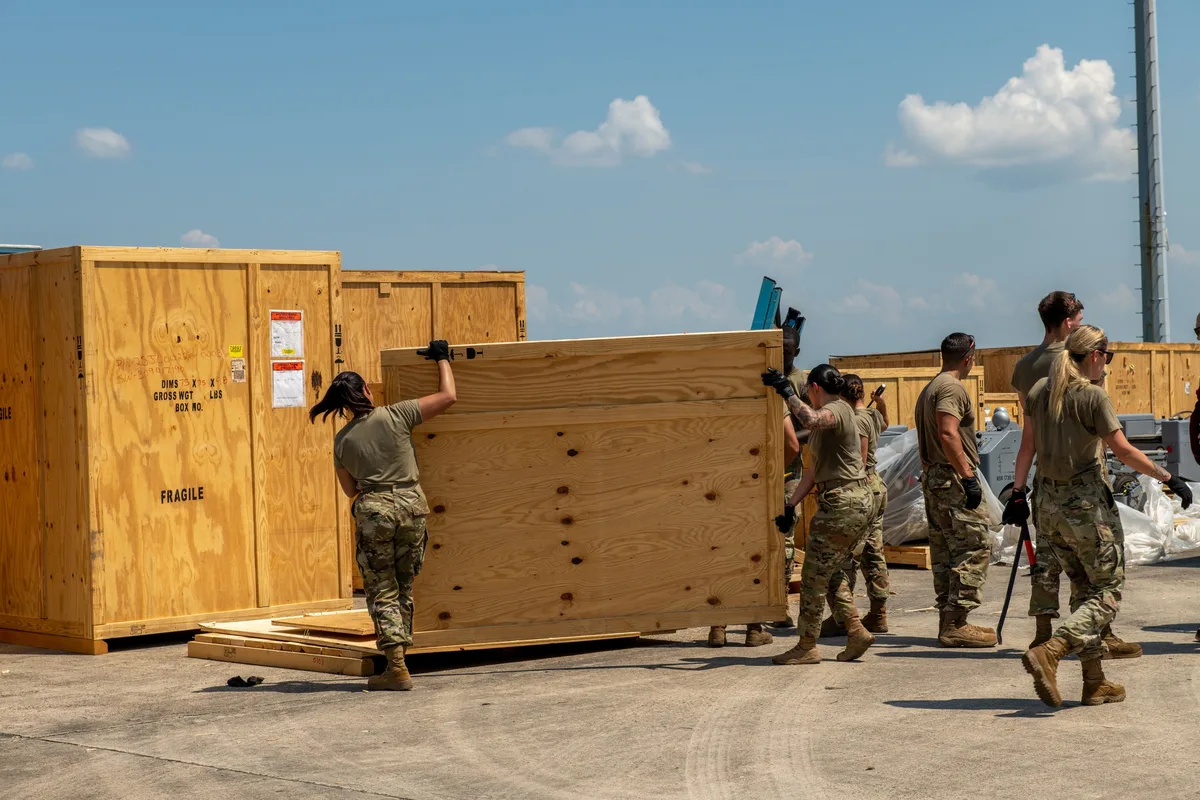
ITAR facility requirements in practice: six controls for a warehouse
ITAR does not prescribe a universal cage, camera or lock specification for an ordinary unclassified warehouse. Rather, the physical measures need to support the applicable access restrictions and any additional licence or contractual conditions.
DDTC’s Compliance Program Guidelines, issued in December 2022, describe eight elements of an effective program, including training, recordkeeping and audits.
For a warehouse, the following six areas translate that work into daily operations.
Access control and segregated storage for defence articles
A caged area or a clearly defined storage zone can separate controlled inventory from general stock. Badge permissions should reflect each worker’s verified status and authorization, while entry logs establish who accessed the area and when.
Camera coverage can help reconstruct an incident or answer a client’s questions about handling. The appropriate combination of barriers, monitoring and access control will depend on the inventory, the layout and the contract. These are measures chosen to safeguard the goods; they should not be presented as a government-issued ITAR facility security standard.
Visitor management in an ITAR storage zone
Visitor arrangements need to be settled before someone reaches the controlled area. The log should identify the visitor, employer, relevant status and host, with access granted only to the extent authorized.
For a foreign-person visitor, the warehouse must establish whether the visit could disclose controlled technical data and whether the necessary licence or exemption covers that disclosure. Keeping unauthorized visitors outside the zone, using escorts and restricting photography can reduce accidental releases. An escort alone does not authorize access to technical data.
A Technology Control Plan for a single warehouse site
A Technology Control Plan (TCP) records how the site will protect controlled items and information from unauthorized access. It should identify the inventory and storage areas, explain the access rules and IT controls, and assign responsibility for training, incident reporting and day-to-day compliance.
The document connects procedures that might otherwise sit with separate teams. Receiving staff, supervisors and system administrators should be working from the same understanding of who may handle an item or open its records.
The ITAR does refer to a TCP: 22 CFR 126.13(c) says one facilitates application processing where foreign persons work at security-cleared facilities. For other warehouses, a TCP is a common way to document controls, rather than a universally prescribed ITAR form.
Recordkeeping and chain of custody for ITAR inventory
A usable audit trail follows an article from receipt through every transfer to its final shipment or other disposition. Serial and lot numbers connect the physical stock to those records.
Under 22 CFR 122.5, persons required to register must maintain the relevant records, normally for five years from the applicable licence or approval expiry, or transaction date. DDTC can prescribe a different period in individual cases. Records must be available for inspection, and electronic systems must preserve a traceable history of changes.
An unregistered storage-only 3PL may still need to provide the same chain of custody to its customers. Its registrant clients rely on receipt, transfer and shipment records to discharge their own obligations, so retention arrangements should be agreed at onboarding.
WMS, ERP and OMS access to technical data
A warehouse management system (WMS) can expose information that the physical storage zone successfully protects. Drawings, specification sheets and photographs may sit beside ordinary stock data on item masters, receiving records or damage reports. Where those attachments contain controlled technical data, their permissions need the same attention as access to the goods.
Section 120.56 expressly addresses access information that enables a foreign person to view unencrypted technical data. A shared administrator account or an offshore support desk can therefore create a release path even if nobody enters the warehouse.
Review those accounts, external integrators and cloud-support arrangements before the system goes live. The same review belongs in enterprise resource planning (ERP) and order management system (OMS) implementations, wherever controlled information is copied or made accessible. Permissions should follow verified status and authorization across the connected systems.
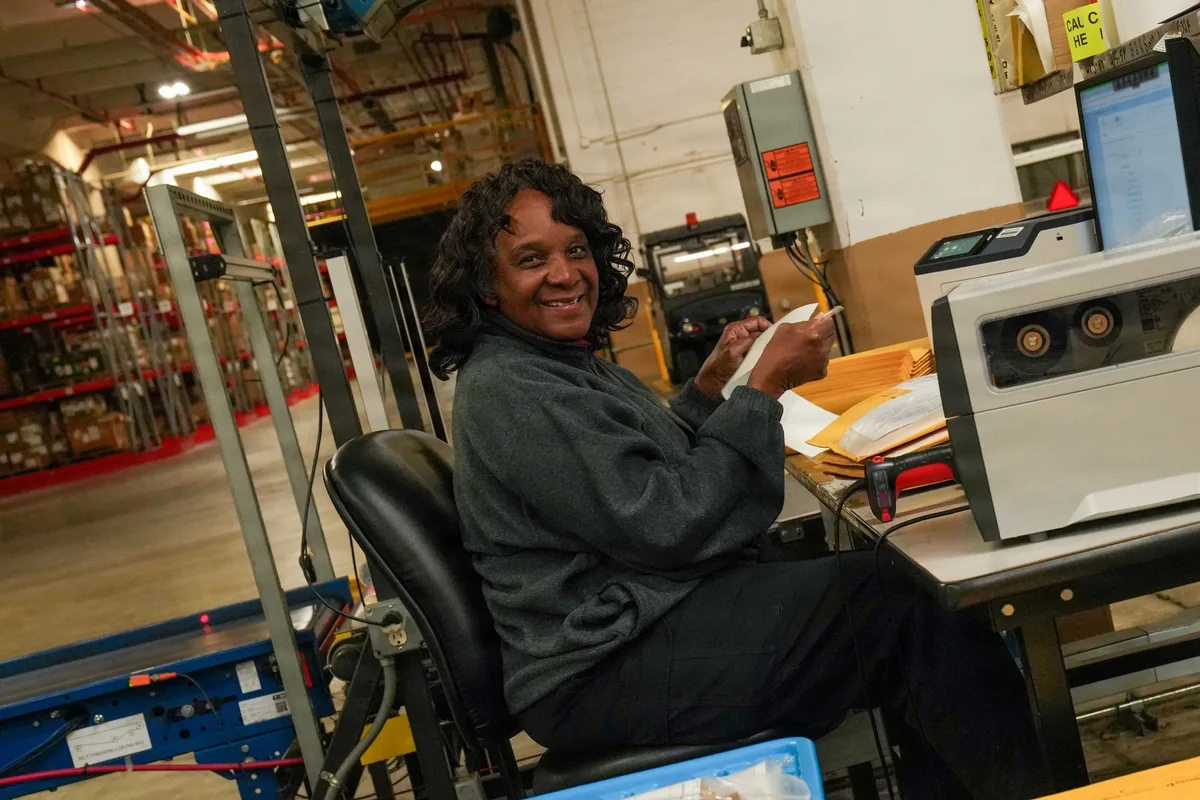
Outbound paperwork and staff training for ITAR shipments
The exporter, often the 3PL’s client, is responsible for the export documentation. For covered tangible shipments, 22 CFR 123.9 requires the commercial invoice to identify the ultimate destination, end-user and licence or other approval number or exemption citation, alongside the prescribed destination-control statement.
Those details should be in the order file before dispatch. The 3PL also needs to confirm that its role and the shipment parties fit the authorization, including any requirement for the forwarder to be named on the licence.
Training should reach everyone able to enter the storage zone or open controlled records. An annual refresher and signed training records are practical ways to demonstrate that instruction has taken place, supported by updates when duties or procedures change.
Example: radar parts at a US 3PL
Consider a hypothetical scenario where an Ohio warehouse is receiving 40 crates of radar parts for a US defence contractor. The contractor confirms in writing that the parts are on the US Munitions List.
Two US person employees open the crates and check serial numbers in the designated storage area. The crates then enter the caged zone, and the WMS restricts the associated controlled records to approved users.
The first outbound order sends 10 crates to the contractor’s Texas plant, a domestic movement. A later instruction sends 5 crates to a registered Canadian supplier. For that shipment, the contractor documents the applicable exemption and confirms that the articles, recipient, end-use and route qualify. Registration of the recipient alone would not establish eligibility.
The 3PL retains the receipt, both shipment files and the exemption documentation, under a retention schedule meeting the applicable five-year rule. Its work in this example involves storage and shipment on the contractor’s instructions, with no manufacturing, repair or sales negotiation. It should still confirm its own registration position, particularly its role in the export, rather than infer an exemption from the client’s instructions.
How Canadian regulations differ
In Canada, the Defence Production Act prohibits knowingly examining, possessing or transferring controlled goods without registration or an applicable exemption. A business can therefore need Controlled Goods Program (CGP) registration simply because it stores the goods.
Public Services and Procurement Canada (PSPC) administers the program. Canada’s Controlled Goods List includes ITAR-controlled defence articles, and PSPC’s guidance explains that changes to the U.S. Munitions List are reflected in the Canadian list.
This difference has practical consequences for a 3PL operating on both sides of the border. Its U.S. warehouse might conclude that storage alone does not trigger DDTC registration. It cannot apply that conclusion at its Canadian site.
Scroll horizontally to read all three columns on smaller screens.
| Point | United States: ITAR / DDTC | Canada: CGP / PSPC |
|---|---|---|
| Registration trigger | Specified manufacturing, exporting, temporary importing and defence-service activities; brokering is addressed separately | Examining, possessing or transferring controlled goods, subject to exemptions and exclusions |
| Storage alone | Not a listed trigger under 22 CFR 122.1 | Possession generally requires registration |
| Personnel access | U.S. person status and applicable authorization determine access to controlled technical data | Authorized staff undergo the applicable security assessment; exemption routes cover specified other people |
| Site document | No universal warehouse TCP form; a TCP is commonly used to document controls | A security plan must cover each site holding controlled goods |
| Visitors and temporary workers | Required authorization must cover any release of controlled technical data to foreign persons | Certificates are required for the visitor, temporary-worker and student categories subject to that process; other exemptions have their own conditions |
| Oversight | Required records are available for DDTC and other authorized inspections | Compliance inspections include review of procedures and, for site inspections, a physical walk-through |
| Cross-border connection | The Canadian exemption in 22 CFR 126.5 depends on the recipient and transaction meeting its conditions | CGP registration supports qualifying receipts under the exemption; it does not authorize every shipment |
What a Controlled Goods Program registrant must set up at a warehouse
A CGP registrant needs a designated official and a security plan covering the site. The designated official assesses the officers, directors and employees who require access under the applicable process, and determines the extent of their authorization.
PSPC’s security-plan guidance calls for procedures to control the goods, report and investigate security breaches, train staff and brief visitors. Each location must be covered, although a single plan may address several sites if it reflects the conditions at each one.
Visitor, temporary-worker and international-student exemptions require attention before access is granted. People falling within those defined categories need certificates; separate provisions apply to certain other individuals, including qualifying employees of ITAR-registered organizations. Moreover, the word “visitor” should not be treated as a blanket description of everyone entering the building.
A contractor who will access controlled goods also needs the appropriate registration or exemption. A cleaning contractor denied access to the goods presents a different situation. During a CGP site inspection, PSPC reviews the physical security measures as well as the documented procedures.
How the ITAR Canadian exemption links CGP registration to U.S. shipments
The Canadian exemption in 22 CFR 126.5 permits qualifying exports of unclassified defence articles to Canada without an individual licence. Eligible Canadian recipients include specified government authorities and Canadian-registered persons, but excluded articles and other conditions still apply.
CGP registration is therefore relevant to a Canadian warehouse receiving eligible goods under this exemption, but the exporter must also check the transaction itself. A later transfer to another Canadian end-user remains subject to the section’s retransfer provisions.
That connection has a history. The United States curtailed Canada’s earlier exemption in 1999. The CGP began in April 2001, as the countries strengthened their defence trade controls, and much of the exemption was restored the following month. For Canadian suppliers pursuing U.S. program work, eligibility and the ability to safeguard controlled inventory remain closely connected.
ITAR and Controlled Goods penalties that apply to logistics providers
A logistics provider can face ITAR penalties for its own violations. As of 26 November 2026, 22 CFR 127.10 sets the civil maximum for each violation of 22 U.S.C. 2778 at the greater of US$1,271,078 or twice the transaction value. OMB cancelled the 2026 inflation adjustment, leaving the 2025 amount in place.
For a wilful violation, the Arms Export Control Act provides for a criminal fine of up to US$1,000,000, imprisonment for up to 20 years, or both. Debarment can also prevent a company from participating in defence exports.
In Canada, a section 37 offence under the Defence Production Act can carry, on indictment, a fine of up to C$2,000,000, imprisonment for up to 10 years, or both. An offence continuing across several days can result in a separate offence for each day.
Contractual obligations extend through the supply chain as well. DFARS 252.225-7048 requires compliance with applicable export-control rules and inclusion of the substance of the clause in subcontracts. This helps explain why a prime contractor examines a logistics provider’s controls before awarding work.
What defence buyers check before giving a 3PL controlled inventory
The buyer needs to establish whether the warehouse can perform the proposed work within the applicable authorization and keep an auditable record of it. A subcontractor’s failure can disrupt the program and expose other parties where their own conduct or contractual obligations are implicated. Liability depends on the circumstances; it does not automatically pass to the prime merely because a subcontractor committed a violation.
A 3PL should be ready to provide:
- Its DDTC registration details and relevant empowered-official contact, or a written assessment explaining why registration is not required.
- The Canadian site’s CGP registration and designated-official details, where applicable.
- Evidence that assigned staff meet the relevant U.S. person, authorization or CGP security-assessment requirements.
- The site’s Technology Control Plan or CGP security plan.
- A sample receipt, transfer and shipment traced through the records by serial or lot number.
- WMS and ERP permissions demonstrating who can open controlled item records and attachments.
ITAR readiness checklist for warehouses and 3PLs
Begin with classification and the proposed service scope. Those decisions determine which registrations, authorizations and site controls the warehouse needs.
- Obtain the client’s written classification of the inventory, including which items fall on the U.S. Munitions List.
- Map receiving, storage, inspection, kitting, repair and shipping services against the relevant ITAR activities.
- Establish with counsel whether the business needs DDTC registration under part 122 or part 129.
- Complete the Canadian site’s Controlled Goods Program registration, or document an applicable exemption, before controlled goods arrive.
- Define a caged or zoned storage area, restrict entry and maintain access logs.
- Verify and document the personnel status and authorization relevant to each task: U.S. person status and applicable approvals for U.S. operations, or the required CGP assessments and exemptions in Canada.
- Restrict controlled drawings, specification sheets and photographs in the WMS, ERP and OMS, including support access.
- Document the site’s Technology Control Plan or required CGP security plan and assign responsibility for keeping it current.
- Establish serial- or lot-level receipt, transfer and shipment records, with the appropriate retention schedule.
- Train the people performing the work and test the procedures through an internal audit before operations begin.
Questions about ITAR facility requirements for warehouses and 3PLs
Does a warehouse need ITAR registration to store defence articles?
Storage alone is not listed as a registration trigger in 22 CFR 122.1. The provision addresses manufacturing, exporting, temporary importing and defence services; part 129 separately covers brokering. A warehouse’s additional work may bring it within those rules, so its actual service scope should be assessed with counsel or through DDTC guidance. Access restrictions can apply even when registration is unnecessary.
Is there an ITAR certification for 3PLs?
No. DDTC registers businesses engaged in specified activities but does not certify warehouses or companies as ITAR compliant. Registration is renewed annually and provides no export rights on its own. When a 3PL describes its warehouse as compliant, buyers should examine the procedures, training and access controls supporting that claim, together with its registration position.
Can green card holders handle ITAR inventory?
Yes, lawful permanent residents are U.S. persons under 22 CFR 120.62. The definition also encompasses protected individuals, including U.S. citizens, nationals, qualifying refugees and people granted asylum. A citizens-only rule is narrower than the ITAR definition. The employer should verify status and assign access according to the person’s duties and any other applicable restrictions.
Can foreign nationals work in an ITAR warehouse?
Yes, but nationality alone does not resolve access eligibility. Some foreign nationals, including lawful permanent residents, are U.S. persons under the ITAR. For employees who are foreign persons, tasks must avoid unauthorized technical-data releases, or be covered by an applicable authorization. Separating work areas and restricting controlled system records can help prevent a deemed export.
What is a Technology Control Plan?
A Technology Control Plan documents how a site protects export-controlled articles and technical data. It identifies the controlled inventory, storage areas, responsible personnel, access rules, IT controls and training arrangements. Section 126.13 mentions a TCP for licence applications involving foreign persons at security-cleared facilities. Other warehouses commonly use one to make their controls clear to staff, customers and auditors.
How long must ITAR records be kept?
For persons required to register, the ordinary period under 22 CFR 122.5 is five years from the applicable licence or approval expiry, or transaction date. DDTC may prescribe a different period in an individual case. Records must remain available for authorized inspection. A 3PL supporting a registrant should align its retention arrangements with the client’s applicable obligations.
Does a Canadian warehouse need Controlled Goods registration to store ITAR items?
Generally, yes: possessing goods covered by the Controlled Goods List requires registration unless an applicable exemption or exclusion applies. The warehouse must establish the classification and its registration position before receipt. CGP registration also supports eligible shipments under the ITAR Canadian exemption, but it does not remove the need to check the articles, end-use, recipient and other transaction conditions.
Next steps for a warehouse or 3PL preparing to hold defence inventory
For a 3PL considering defence work, the first useful document is a clear description of the services it will perform. From there, it can establish its registration position, decide who may handle the goods and their records, and give the buyer evidence that those controls work. That is how ITAR facility requirements become an operating plan. A Canadian site must also resolve CGP registration before it takes possession of controlled inventory.
Anvil North follows Canada’s defence supply chain for suppliers, buyers and logistics providers. Browse the Canadian supply atlas for vendor and capability records, follow its U.S. corridor market coverage for cross-border demand, or request the free Canada Industry Brief by email.
This article provides general information and is not legal or export-control advice.
Bilal Khan is the founder and editor-in-chief of Quwa Group, which publishes Quwa and Anvil North. Quwa has covered defence procurement and industry since 2015.