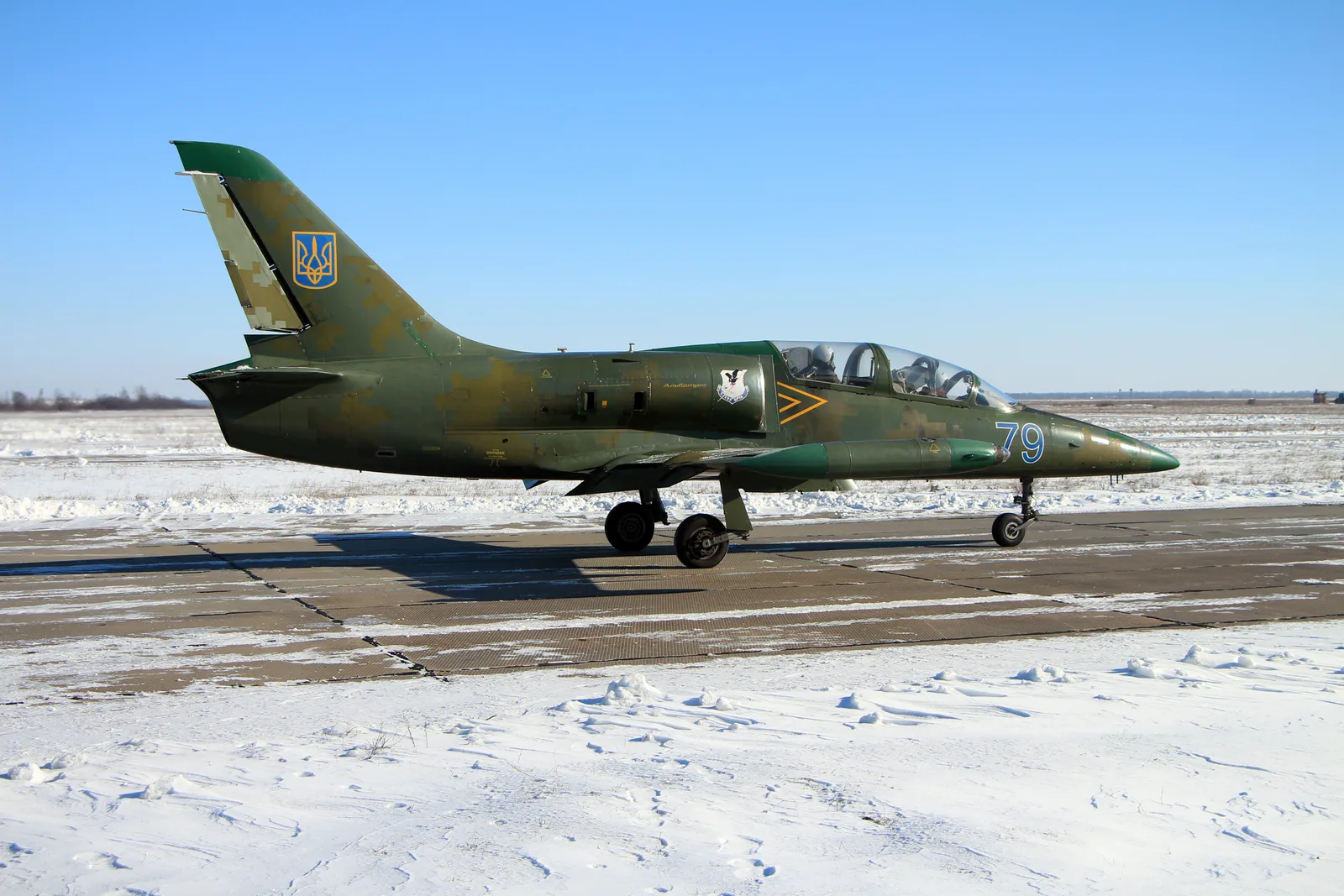

Ukrainian military pilots are using L-39 jet trainers in North Bay, Ontario, to prepare for the next stage of training on F-16 and Gripen combat aircraft.
In a 12 September account of President Volodymyr Zelenskyy’s visit, Ukraine’s presidency described a four-aircraft L-39 demonstration and a cohort of 21 Ukrainian military personnel. It said the school had been training Ukrainians since April 2025, with trainees completing the third and fourth phases before moving to foreign combat aircraft.
The Canadian activity addresses a preparatory stage in that transition. Aircraft acquisition and pilot preparation have to advance together, but the L-39 course does not itself establish that its graduates are qualified to operate either frontline fighter.
North Bay’s role in Ukrainian fighter training
The International Tactical Training Centre (ITTC), part of ITPS Canada, operates the training campus at North Bay Jack Garland Airport. In its own account of Zelenskyy’s visit, published on 14 September, ITTC identified the location as its NATO-accredited fighter pilot training campus.
The distinction between the organization’s names matters. ITPS Canada encompasses test-pilot and tactical-training activities; the North Bay story concerns the tactical-training operation. The aircraft shown in the Ukrainian account were L-39s. Neither account establishes that Ukrainian personnel are flying Gripens in Canada.
Canada has also invested in the infrastructure supporting this activity. FedNor announced a C$1.5-million repayable investment in July to help relocate ITTC into a 21,000-square-foot hangar in North Bay. Its description of fighter lead-in training combines ground instruction, simulation and live flying, supported by an Advanced Aircraft Simulation Centre and a Mission Control Theatre for debriefing.
That investment supports the Canadian facility. It should not be read as the price of Ukraine’s training program or as a disclosed payment for the 21-person cohort.
Why L-39 training comes before Gripen conversion
Fighter lead-in training provides an intermediate step between learning to fly military aircraft and learning to employ a particular combat aircraft. ITTC’s mix of classroom work, simulation, flying and debriefing allows those activities to be combined within a preparatory course.
The operational distinction is between developing transferable flying and tactical skills and completing the training specific to a fighter’s systems and procedures. The Ukrainian presidency identifies F-16 and Gripen as subsequent destinations, but does not publish the cohort’s allocation between those aircraft, graduation dates or conversion locations.
Consequently, the 21 personnel should not be presented as 21 Gripen pilots ready for operations. The significance is that preparation is under way before the entire aircraft transition is complete.
Sweden has signed for 16 Gripen E aircraft
Ukraine’s Gripen acquisition has already advanced beyond the initial statement of intent. On 30 June, the Swedish Defence Materiel Administration announced an agreement to sell Ukraine 16 Gripen E fighters, with deliveries starting in 2029. It also placed the corresponding order with Saab. The government-to-government package includes support and training.
The older Gripen C/D donation follows a separate schedule. FMV said in June that it aimed to conclude that agreement in the autumn, enabling deliveries early in 2027. This distinction separates a signed new-aircraft purchase from preparations for an earlier transfer of C/D aircraft.
Zelenskyy subsequently expressed an expectation that Ukraine would receive Gripens in 2026. That statement is a forward-looking expectation, rather than confirmation of delivery, and differs from FMV’s earlier C/D target. The reviewed announcements do not resolve the timing difference.
What the Canadian training program establishes
North Bay gives Ukraine access to preparatory training capacity outside the country while its fighter transition progresses. The practical value depends on how that preparation connects with subsequent conversion, maintenance support and the availability of operational aircraft.
This is also separate from Canada’s own Future Fighter Capability Project. Hosting Ukrainian training for a future Gripen transition does not establish a Canadian decision to acquire that aircraft.
The next useful indicators are completion of the Canadian course, confirmed conversion arrangements and aircraft deliveries. Together, those milestones would show how training activity is becoming an operational fighter capability for Ukraine.