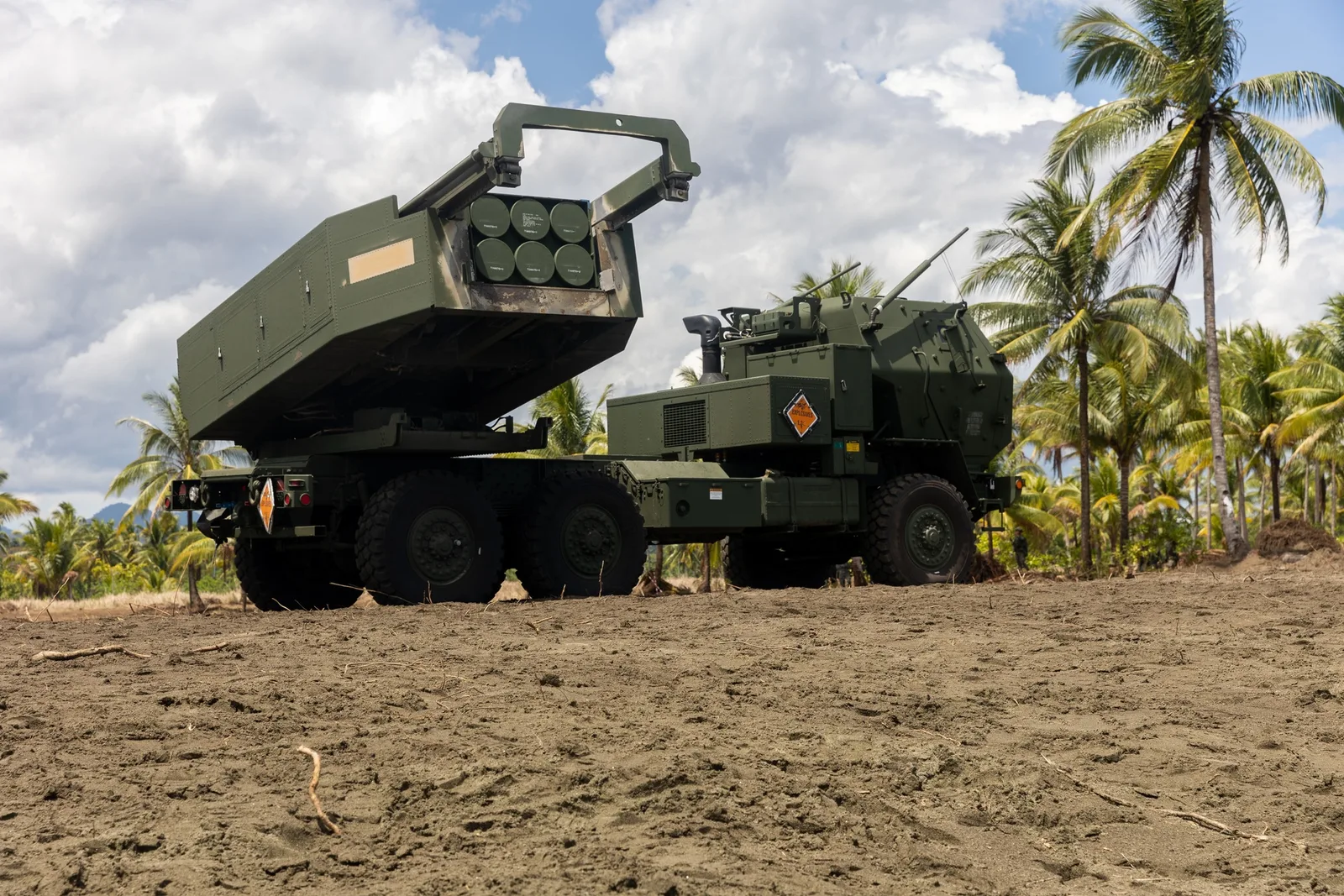
Sentinel Advanced Military Solutions says a C$10-million Industrial and Technological Benefits contribution from Lockheed Martin will support intellectual property development across its new defence consortium. The contribution is linked to Canada’s HIMARS acquisition, while the consortium combines the StarForge deployable platform with a University of Alberta research partnership.
Sentinel Advanced Military Solutions, a wholly owned subsidiary of CMP Advanced Mechanical Solutions, announced the Sentinel Defence Consortium in a release issued from Châteauguay, Quebec, on 16 September 2026.
Sentinel identifies Lockheed Martin and the University of Alberta as anchors of the initiative. The announcement establishes a consortium and integration effort with stated financial support; it does not establish an accepted military system or a customer delivery contract.
Lockheed Martin’s contribution is linked to Canada’s HIMARS purchase
Sentinel connects the C$10 million to the Canadian Army’s acquisition of 26 HIMARS rocket systems. The release calls the source program the “Long-Range Precision Fires Project.” National Defence’s name is Long Range Precision Strike (Land), or LRPS(L).
Canada’s HIMARS agreement includes launchers, munitions and support
National Defence says Canada and the United States finalized the government-to-government agreement under the US Foreign Military Sales program in January 2026. The package covers 26 M142 HIMARS launchers, an initial operational stock of munitions, spare parts, training and support services. Deliveries to the Canadian Army are expected to begin in 2029.
The estimated C$2.6-billion LRPS(L) acquisition cost includes project management, infrastructure, contracts and contingency. It should not be treated as the published value of Lockheed Martin’s ITB obligation.
Sentinel describes non-repayable support for new intellectual property
Sentinel says the contribution will fund novel intellectual property across the consortium, with most expenditure going to Canadian industry and suppliers. No equity changes hands and no repayment is required, according to the release.
The HIMARS ITB obligation creates a route for Canadian industrial work
National Defence stated at the HIMARS announcement that Canada has no manufacturer of the launcher system or associated long-range missile capability. Under the ITB policy, Lockheed Martin Missiles and Fire Control must undertake Canadian business activities and investments equal to the value of its work related to the Foreign Military Sale.
National Defence expects supply-chain and research investment
National Defence said the activities are expected to include bringing Canadian companies into global supply chains, investing in research and development, and supporting small and medium-sized businesses.
Industry Minister Mélanie Joly said the government would require direct investment in Canada’s economy. Lieutenant-General Michael Wright, Commander Canadian Army, described HIMARS as an advance in Army modernization.
Anvil North’s assessment is that Sentinel’s announcement illustrates a potential industrial return from a sole-source foreign acquisition: an obligation associated with the HIMARS sale supporting Canadian intellectual property development in a Quebec-based consortium with an Alberta research partner.
The accounting status remains unresolved. Innovation, Science and Economic Development Canada must assess ITB transactions before crediting them against an obligation. Sentinel’s announcement provides neither confirmation that the C$10 million has been credited nor a published total for Lockheed Martin’s LRPS(L) obligation. The contribution therefore cannot yet be expressed as a verified share of that obligation.
StarForge is intended to bring manufacturing and support into the field
Sentinel describes StarForge as a deployable platform for Arctic terrain, forward operating bases and remote installations operating away from conventional supply chains.
StarForge combines on-site production with operational support
Stated functions include producing drone components, replacement parts and mission-critical hardware on site, including through 3D printing. Sentinel CEO John Soares describes an objective of making command and control, secure communications, autonomous surveillance, deployable power and manufacturing available within hours of arrival at a remote location.
That timeframe is a stated objective. The announcement does not provide an acceptance result demonstrating the complete system in service.
CMP Advanced Mechanical Solutions provides the manufacturing base
Sentinel’s parent, CMP Advanced Mechanical Solutions, is described as a vertically integrated Canadian electro-mechanical manufacturer with more than 700 employees. CMP serves defence, energy storage, warehouse automation, homeland security, light rail and data centre infrastructure markets.
Lockheed Martin contributes VCSi command and control to StarForge
Sentinel identifies a Calgary-based Lockheed Martin Skunk Works operation as a technology contributor to the program.
VCSi provides the consortium’s primary command and control system
The stated contribution includes VCSi command and control, related mission software and sensor fusion expertise. Kristen Leroux, Lockheed Martin’s vice president and regional executive for Canada and Latin America, cited 85 years of partnership in Canada and the company’s support for small and medium-sized enterprise growth.
The University of Alberta is Sentinel’s stated research anchor
Sentinel places the University of Alberta at the centre of the consortium’s research and sovereign intellectual property mandate.
University of Alberta support includes testing and engineering
The release attributes advanced testing infrastructure, engineering expertise and academic depth across the technology stack to the university. The research role is described by Sentinel; the announcement does not provide a separate University of Alberta confirmation.
The Sentinel consortium’s wider membership remains undisclosed
Sentinel describes partners operating from Atlantic Canada and Quebec through to Alberta and British Columbia. Beyond Lockheed Martin and the University of Alberta, however, the announcement does not identify the participating organizations.
Sentinel lists six consortium capability areas
The stated capabilities are:
- Counter-uncrewed aerial systems and unmanned systems.
- AI-enabled target recognition and autonomous sensing.
- Encrypted tactical communications and resilient mesh networking.
- Edge manufacturing and additive production.
- Deployable power systems.
- Manufacturing execution software.
A published roster would allow those functions to be connected to named suppliers and defined responsibilities. For now, the missing membership list is a material gap in the announcement.
Sentinel places StarForge within Canada’s Defence Industrial Strategy
The release cites the Defence Industrial Strategy, launched earlier in 2026, as identifying C$180 billion in defence procurement opportunities and C$290 billion in defence-related capital investment over the next decade. These are strategy-wide figures cited by Sentinel, not funding committed to StarForge.
The Defence Industrial Strategy also frames other Canadian programs
The strategy and its Build-Partner-Buy framework also feature in the Canadian Patrol Submarine Project. Provincial and federal supplier-development measures are proceeding in parallel, including the Manitoba defence supplier and RRC Polytech funding covered separately by Anvil North.
What to watch next in the Sentinel Defence Consortium
The next useful disclosures are a full membership roster, independent confirmation of the University of Alberta partnership, and clarification of the Lockheed Martin contribution’s ITB credit status. The total LRPS(L) obligation is also needed to put the C$10 million in proportion.
Operational progress would require evidence of an accepted system or a delivery contract beyond the present consortium and integration announcement.
Sentinel’s 16 September release says the consortium was unveiled at CANSEC 2026, held in late May. The release date therefore records the September announcement, rather than establishing a September unveiling.