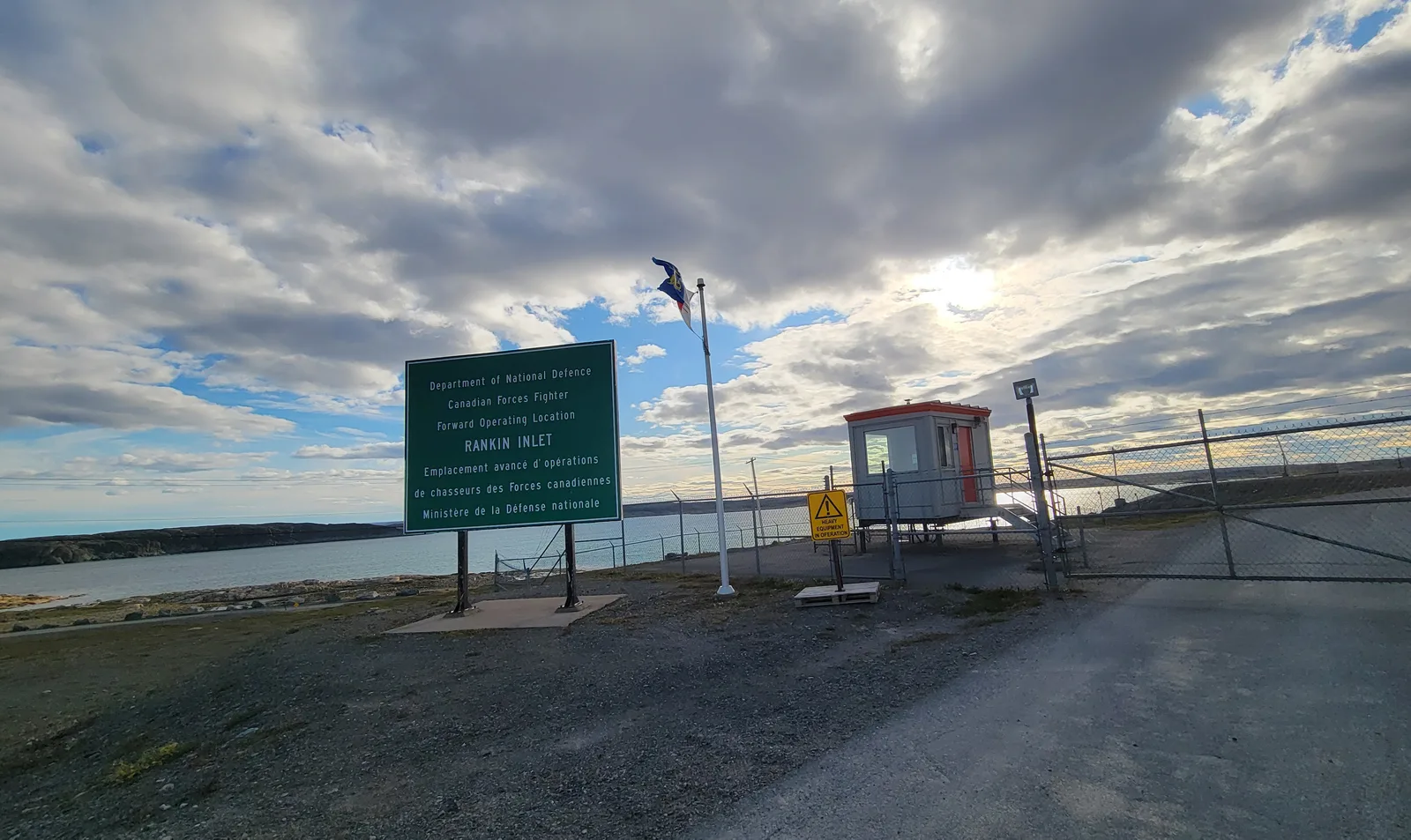

Ottawa has allocated $85.5 million through the Arctic Infrastructure Fund (AIF) to rehabilitate Rankin Inlet’s airfield in Nunavut. The site is also intended to serve the Canadian Armed Forces (CAF) as a Northern Operational Support Node (NOSN).
On 28 September, Minister of Northern and Arctic Affairs Rebecca Chartrand announced the allocation on behalf of Transport Minister Steven MacKinnon, according to Canadian Defence Review. Chartrand also opened the airport’s new terminal building, which received nearly $63.5 million from the National Trade Corridors Fund (NTCF).
What the Funding Will Deliver
The AIF investment supports the Rankin Inlet Airfield Rehabilitation Project. Its scope covers approximately 141,000 m² of pavement, including Runway 13-31, Taxiways A and C, and their associated apron surfaces.
The work is expected to extend the airfield’s operating life by 15 to 20 years while reducing its long-term maintenance needs. Rankin Inlet is the Kivalliq region’s main logistics hub, supporting passenger movements and the delivery of cargo, food and medical supplies.
Where Defence Requirements Enter
The rehabilitation funding sits alongside a separate Department of National Defence (DND) investment in the runway, reaffirmed by Prime Minister Mark Carney earlier this year. Together, these investments are intended to meet civilian transportation needs and support CAF activity in the North.
Built originally by NORAD, the runway can accommodate CF-188 Hornet fighters and large transport aircraft. According to the government, those capabilities make Rankin Inlet suitable for its proposed NOSN role, allowing the CAF to deploy and sustain forces farther into the Arctic.
Three federal funding streams therefore converge at the site. The NTCF financed the terminal, the AIF is financing airfield rehabilitation, and DND is contributing its own funding to the runway.
A Civil Fund With a Defence Purpose
Budget 2025 introduced the AIF with $1 billion to develop year-round transportation connections for Northern and Arctic communities. The fund supports dual-use infrastructure serving civilian, community and defence requirements.
The defence contribution is therefore part of the civil program’s design. In Rankin Inlet’s case, the award is directly connected to a specified CAF operational role.
The announcement also came during a week of related activity. In Nunavut, the Canadian Coast Guard Ship (CCGS) Des Groseilliers completed Exercise ARCTIC GHOST alongside HMCS Robert Hampton Gray and CAF partners, Canadian Defence Review reported.
Elsewhere, Ottawa committed up to $22.4 million to open 165 acres at Kelowna’s airport for aerospace, aviation, logistics and advanced manufacturing, according to Canadian Defence Review. That investment demonstrates the same approach outside the North, using federal infrastructure funding to make land available for aerospace and defence-linked industry.
The Benefit to DND
Pooling funding gives DND a usable northern airfield without requiring it to absorb the full cost. Transportation and northern-development programs can finance the civilian requirements, while DND concentrates its investment on the site’s military-specific needs.
Similar arrangements could support other NOSN locations as DND develops its planned network across the North. Whether every site will have a civilian partner of comparable scale remains uncertain, however. Some may have to rely on DND funding alone.
The Opportunity for Contractors
For companies, this is a route into defence work through civil infrastructure contracts. The Canadian Chamber of Commerce’s latest report identifies construction, engineering and Arctic infrastructure as one of four areas where Canadian firms are best positioned, according to the Chamber.
Operating in the North also brings specific requirements. Federal projects in Nunavut involve Indigenous consultation obligations, while government contracting under the Nunavut Agreement includes considerations for Inuit employment and Inuit-owned businesses.
A record of northern construction, experience in cold-weather conditions and partnerships with Inuit firms would therefore appear to put contractors in a stronger position. Larger engineering companies from southern Canada could seek joint ventures with Inuit-owned businesses to pursue NOSN-related projects.
Outlook
For many Canadian firms, Arctic defence expenditure will translate into work on runways, ports, fuel sites and housing rather than weapons programs. Rankin Inlet illustrates how that expenditure can reach contractors through civil funding channels.
Who administers the contract will also affect who competes for it. Work led by Transport Canada or a territorial government would likely proceed under civil procurement rules.
A project led by Defence Construction Canada could carry defence security requirements, potentially restricting participation to cleared companies.
Suppliers should therefore follow each NOSN location as a separate program, identifying its funding streams, contracting authority and schedule. Anvil North will track the sites on its program pages, beginning with Rankin Inlet.