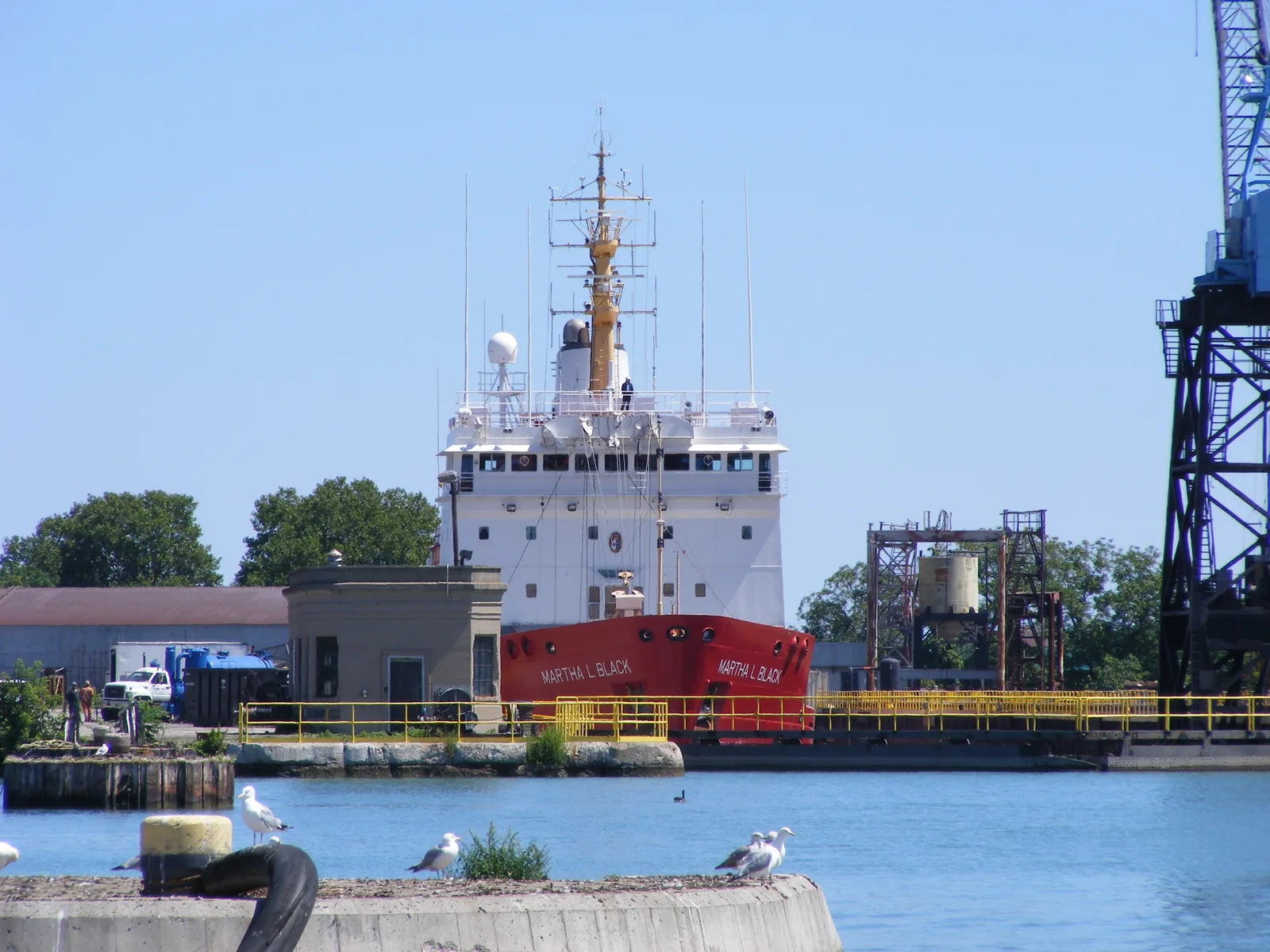

Ontario Shipyards CEO Shaun Padulo wants the Port Weller dry docks in St. Catharines to build the Royal Canadian Navy’s (RCN) next generation of corvettes. The proposal forms part of Team Vigilance’s bid and, if successful, would bring Canadian military vessel construction back to the Great Lakes for the first time since the Second World War.
Team Vigilance comprises Vard Marine, Ontario Shipyards, Thales Canada, SH Defence and Fincantieri. Having introduced its Vigilance concept at CANSEC 2023, the consortium says it is the only group offering a corvette that would be designed, built and equipped in Canada.
The design now on offer is the “Vard 7 105 Continental Defence Corvette”. Vard Marine presented it in a video earlier this year. The company is the Canadian arm of Norway’s Vard Group, which belongs to Italy’s Fincantieri. In April 2025, Algoma Steel signed a letter of intent to serve as the consortium’s exclusive steel supplier. Team Vigilance says that arrangement would make the corvettes the first RCN ships built primarily with Canadian-made steel.
The RCN is seeking 16 to 20 Continental Defence Corvettes at an estimated cost of C$5 billion. Intended for homeland defence, they would patrol waters extending from the Gulf of St. Lawrence to the Arctic ice edge and replace the Kingston-class Maritime Coastal Defence Vessels. RCN commander Vice-Admiral Angus Topshee has said the new ships will “have the fight of the Halifax class”.
Requirements presented to industry include a 7,000-nautical-mile range, endurance for 30-day patrols and the ability to engage submarines and surface ships. Assigning domestic duties to the corvettes would allow the RCN’s future River-class destroyers to concentrate on high-end threats, missile defence and deployments overseas.
Procurement remains in its early stages. At an April 9 industry briefing in Ottawa, the RCN said it did not anticipate a contract award before 2030 or a fully operational first ship before 2039. The program had yet to release a request for information (RFI) as of this summer. Meanwhile, the final two Kingston-class vessels, HMC Ships Moncton and Nanaimo, are scheduled to pay off in 2028.
Ontario Shipyards would also need a place within the National Shipbuilding Strategy (NSS). It is currently outside the strategy and is seeking inclusion among its approved yards to undertake the corvette work. When asked whether Irving Shipbuilding could build the ships, Topshee replied: “If Irving has that capacity, I would ask them to build the River class faster”.
The Hamilton-based shipbuilder assumed the long-term operating lease for the federally owned Port Weller dry docks in 2017. Across that site and its Thunder Bay and Hamilton facilities, it now employs roughly 175 people. Padulo estimates that a corvette award could sustain at least 800 direct employees and 500 subcontractors in St. Catharines for a decade or longer.
Ontario’s government has separately announced a C$200 million grant for improvements to the company’s Hamilton yard. The corvette competition also includes proposals from other suppliers: TKMS is putting forward its MEKO A-100 design, while Saab’s Luleå-class is another contender.
For Padulo, delivery timing is central to the case for an additional builder. He argues that the navy must turn to another shipyard if it wants the corvettes before the 2040s. Navy officers have indicated that the 2039 timetable could move forward if Canadian industry demonstrates it can deliver the ships sooner.