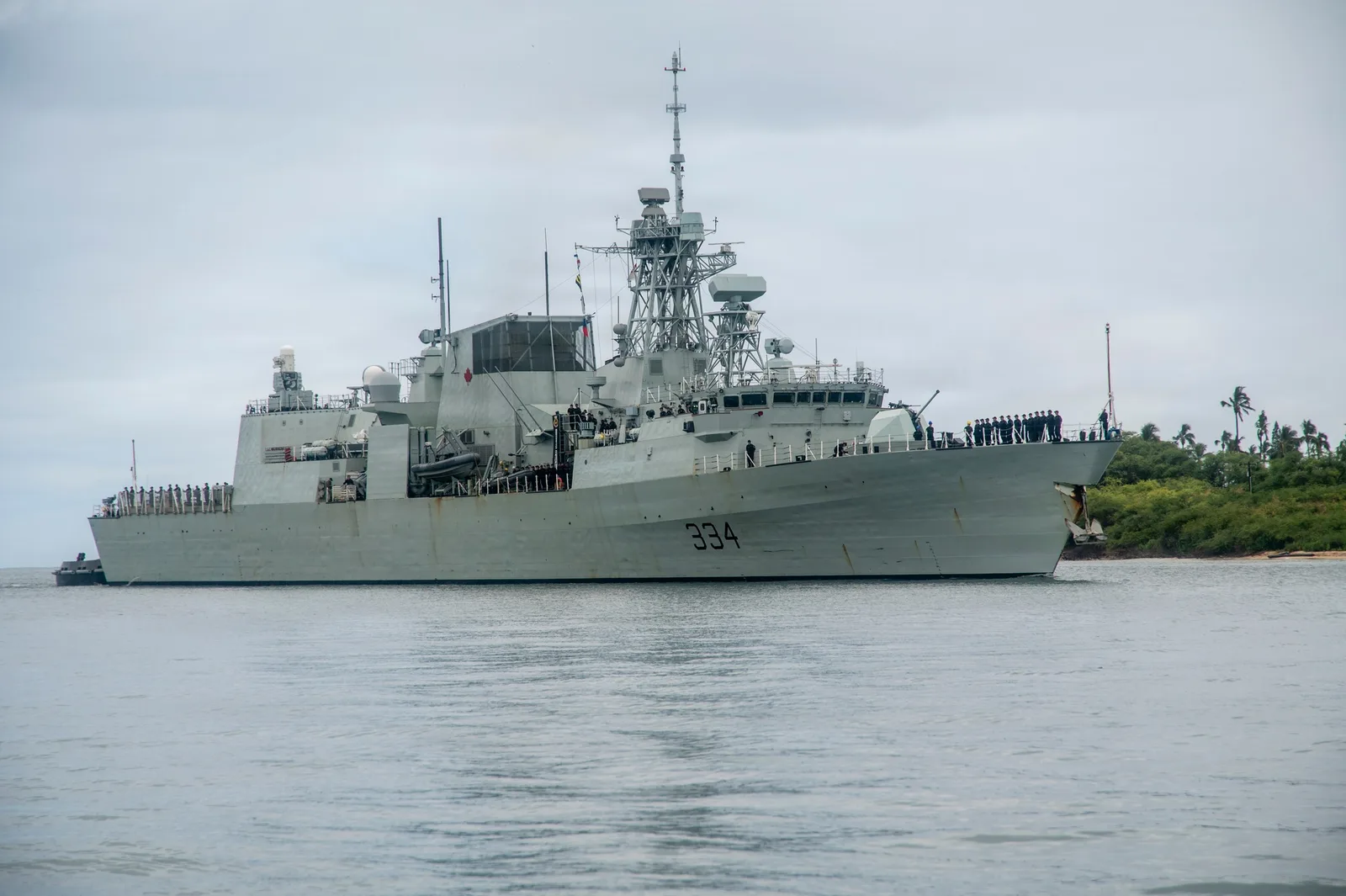
On 11 September, HMCS Regina and its embarked CH-148 Cyclone helicopter participated in a maritime cooperative activity with Philippine and US forces in the Philippines’ exclusive economic zone. The Canadian Armed Forces (CAF) announced the activity on 14 September.
The participating services included the Philippine Air Force, Philippine Coast Guard, Philippine Navy and United States Navy. The CAF said the activity focused on cooperation and interoperability, i.e., the ability of different armed forces to operate together.
The engagement comes as Canada and the Philippines develop the arrangements needed to support closer military cooperation. In that context, Regina’s participation provides an operational counterpart to the agreements Ottawa and Manila have been putting in place.
The frigate and helicopter component
Regina, hull number 334, is one of the Royal Canadian Navy’s (RCN) Halifax-class frigates. The class carries weapons for surface, air and underwater threats and can embark a Cyclone helicopter, combining naval and aviation capabilities on the same deployment.
The Royal Canadian Air Force (RCAF) describes the CH-148 Cyclone as Canada’s principal shipborne maritime helicopter. Its roles include surveillance above and below the sea surface, search and rescue, and tactical transport.
This explains the range of capabilities available through the ship and helicopter combination. However, the CAF statement did not break down the individual drills or their results, nor did it establish which of the Cyclone’s missions its crew performed during this activity.
Building the basis for continued cooperation
Canada and the Philippines signed a Mutual Logistics Support Arrangement in June. In August, National Defence reported that the Philippine Senate had concurred in ratification of their Status of Visiting Forces Agreement.
The two arrangements address different aspects of cooperation. The logistics arrangement supports assistance during deployments and exercises, while the visiting-forces agreement addresses the framework for military cooperation. Their practical value will depend on how the two countries use them during subsequent engagements.
Regina’s activity also sits within a wider pattern of Canadian deployments to the Indo-Pacific. On 17 August, HMCS Charlottetown returned to Halifax after six months under Operations HORIZON and NEON. National Defence said the ship had worked with 15 allied and partner nations and participated in KAKADU, BALIKATAN and VALIANT SHIELD.
HORIZON supports regional engagement, while NEON contributes to enforcing United Nations Security Council sanctions against North Korea. Those were Charlottetown’s assignments; the statement on Regina does not attribute its activity to the same operations.
For Canada, repeated deployments and activities could help turn the growing defence relationship with the Philippines into a continuing ability to operate together. Regina’s participation is one part of that effort. Its longer-term value will become clearer through the training the forces undertake and their practical use of the support arrangements now being developed.